



By Rev. Michael Tutton
Place your hand on your left chest, feel your heart’s pulse, and recall that you are musical.
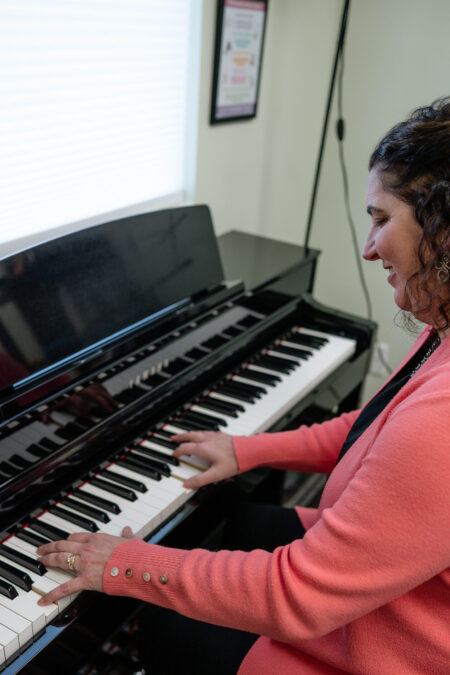
I recently gained this simple insight from Louise MacDonald, owner of Joyful Sounds Music Studio, who for more than two decades has been teaching people of all ages to sing and play instruments.
“From the time before you’re born there is something that is beating inside you, and it’s beating a rhythm,” she said during our conversation.
Still, as citizens struggle to focus their minds amidst a world of Facebook reels and ceaseless activity, do we risk dropping music’s lifeblood from our families and communities?
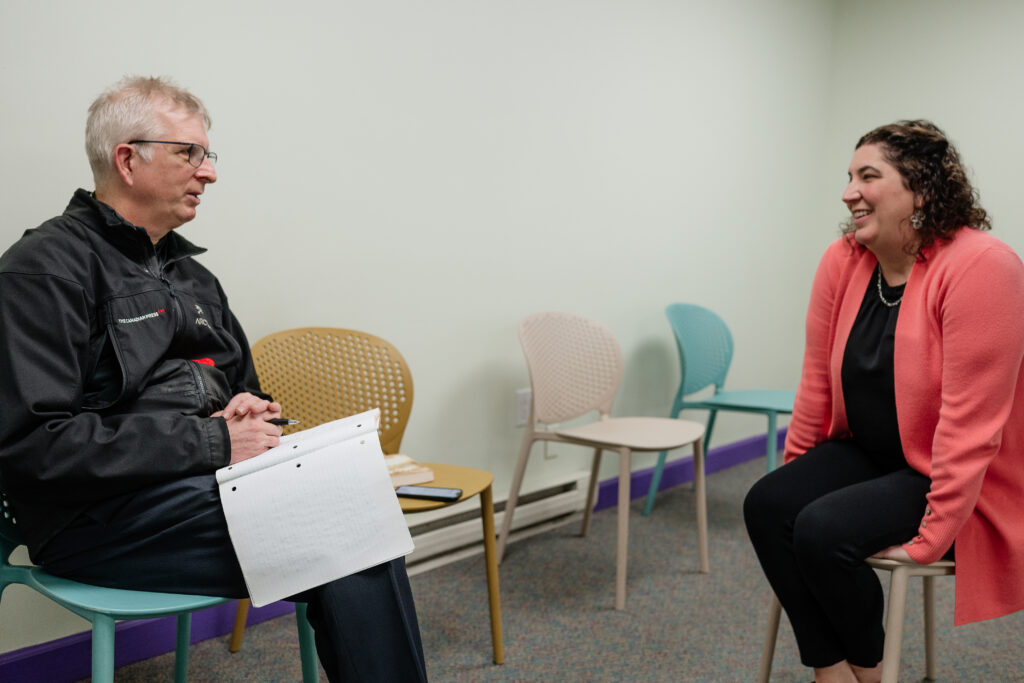
That question also beat at the heart of our conversation in early November at her office in Fall River.
As a priest, I find scriptures constantly remind me of how ancient people experienced a universal and participatory experience in music.
“Sing to the Lord,” sang Miriam the prophet to the struggling Israelites, “for he is highly exalted.” And, according to psalms, the people proceeded to pound drums, pluck harps, strum lyres, blow trumpets, smash cymbals and dance in celebration.
MacDonald’s philosophy grows from a similar sentiment of universality, envisioning music education spreading into homes as children sing to caregivers, and notes are made rather than solely consumed.
Perhaps her approach was born from an early life where tempo, rhythm, and melodic contours were offered to her by generous teachers and through a home life that allowed for time to be filled with practice.
ADVERTISEMENT:







Growing up near Truro, she received piano lessons beginning at the age of eight, joined a school band program at 11 and stayed in school programs until graduation, playing tenor saxophone and alto clarinet.
The joy of playing led her to St. Francis Xavier’s classical piano program, which also allowed her to study jazz. While at college, MacDonald found she loved teaching, prompting her to pursue a degree in music education at Memorial University, including a teaching practicum in the United Kingdom.
Along her educational journey, and while teaching school near Antigonish, MacDonald developed a passion for preschool music education through the Kindermusik program.
MacDonald initially taught this international program from her home in Windsor Junction. Her studio now occupies most of an office building floor along Highway 2, employing a team of 30 teachers and with over 600 students.
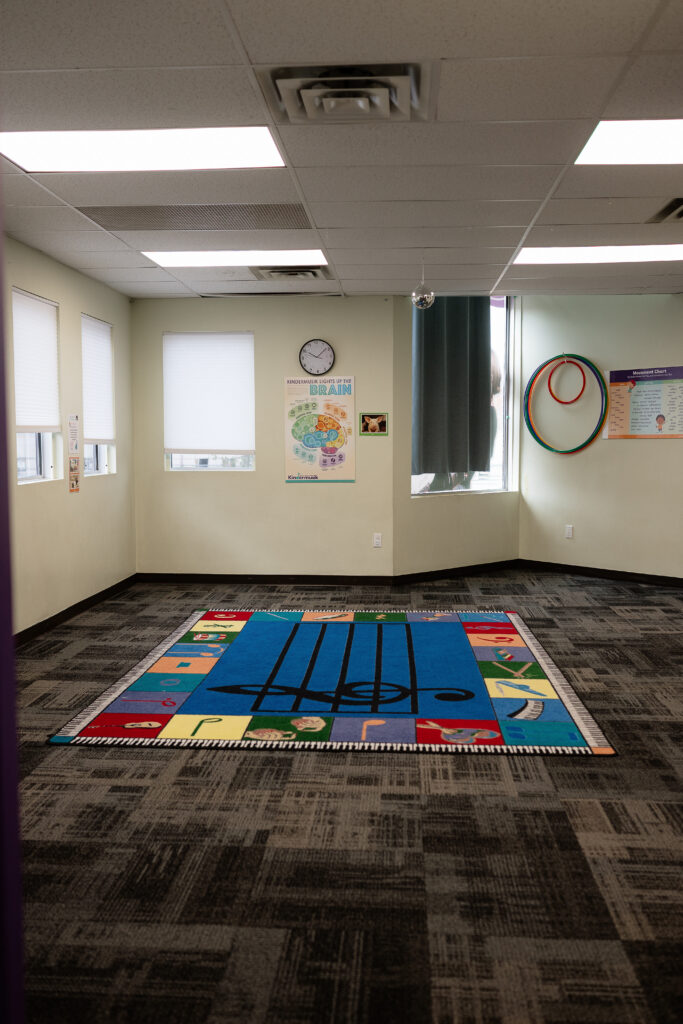
On one classroom wall, I read a sign describing how “Kindermusik lights up the brain,” as “neural pathways develop at an astonishing rate.”
For example, “circle dances” of children whirling around a room on a padded carpet develops “whole body movement” in the frontal lobe in the mind.
Yet, amidst these efforts to engage our minds with music, there are modern trends that tend to merely create melodic distraction.
Music is everywhere, with AirPods piping into walkers’ ears and muzak drifting through grocery story aisles. Oliver Sacks, in his book Musicophilia, described a world of “catchy tunes, with brainworms that arrive unbidden and leave only in their own time.”
ADVERTISEMENT:





MacDonald argues for teaching that develops intergenerational playing and sharing of music, whatever our skill level. “That’s when the (neurological) synapses are forming … that’s when you start to see fireworks in the brain,” she said.
Plus, it’s fun and builds relationships.
She recalls how one bashful Dad came with his pre-schooler daughter to a class and attempted to hang back until the little girl reached out to dance.
“Once he took three steps, he could feel how happy she was. And then he was fine,” she recalled.
When small children from Joyful Sounds visit nursing homes, she witnesses the power of simple songs shared by all ages. Seniors with dementia connect with children as they sing, igniting dormant memories. “It’s just pure magic,” says the 49-year-old, who is also a mother of three. (See this feature story on CBC Music Across Generations at Northwood Bedford)
And yet, despite music’s centrality to our bodies and souls, some high schools in Halifax have struggled to staff and maintain music programs.
Nathan Beeler, a retired music teacher and administrator, told CBC’s information morning program last fall, “the amount of time that’s allocated in Nova Scotia in general to music in the junior high level has decreased over the last 20 years, and because there’s less time for music, there’s less time for students to fall in love with music.”
Perhaps in addition to MacDonald’s private school, we need more resources dedicated to music in schools, along with a revival of grassroots singing, dancing and playing in many locales.
Who knows what may happen if people return to community centres and church halls and dance spaces to sing and dance? As I write this, five churches in Fall River are banding together to revive a mass choir of seasonal music known as Spirit of Advent at St. John’s United Church, to be held Sunday Dec. 6 at 6:30 p.m.
Meanwhile, after 20 years, parents who learned music from MacDonald as children are coming to her front desk and asking, “Is Mrs. Louise still here?” before signing up their children.
Some of those children may become music professionals one day, or teachers.
But to MacDonald the success will be more subtle. In a home, as dinner is being made, a child will sing out loudly, a mother or father will join in, and joyful sounds will emerge.
Rev. Michael Tutton is a former national journalist who is now the Anglican rector of the Parish of Fall River and Oakfield.