

By Rev. Michael Tutton, a former national journalist, who is now the Anglican priest in the Parish of Fall River and Oakfield.
The way of thankfulness is the redeeming and restorative path through life, and yet also can feel like a searing, interior battle when the route becomes bumpy.
I’ll come to the struggle. But let’s begin with my first claim.
Over the past week I consciously noted what I’m thankful for, making a list to present to parishioners at St. Margaret’s in Oakfield and St. Thomas in Fall River.
By Monday, a stream of incidents, from simple to stunning, was quickly filling the notes section of my smart phone.
Upon waking that morning, I was grateful for the coffee I sipped during morning prayers as rain gently pattered against the window.
As I meditated on scripture, I gave thanks for steady, unexciting reading habits, even on the strange chapters in the tumultuous life of the prophet Ezekiel.
My gradually deteriorating Book of Common Prayer has a daily blessing that praises God for “our creation, preservations and all the blessings of this life.” I also request, sometimes grudgingly, that my heart “may be unfeignedly thankful.” (Unfeignedly means “real, sincere … a deep, honest” emotion.”)
In all honesty, some days I should smile as easily as the folks I encounter. There was the cheerful bus driver who took me to a Pilates class in Halifax. Upon arrival, there was a cheerful teacher to help unravel the tensions and crookedness of my aging body.
ADVERTISEMENT:



I know one thing: thankfulness calms my ceaseless focus on the future –How many people will be in the pews Sunday? Will my hip arthritis decrease this week? What’s happening with my diagnosis – and instead brings us to the astounding gifts in the moment.
Such as…
On Tuesday morning there was a social media post from Monika Campbell, a volunteer with Scouts Canada, whose quest to restore of Miller Lake scouting cabin I wrote about earlier this year (In Community: Creating hope at Scout Cabin No. 8 –) The cabin now has a beautiful, blue new aluminum roof as a result of a steady drumbeat of donations.
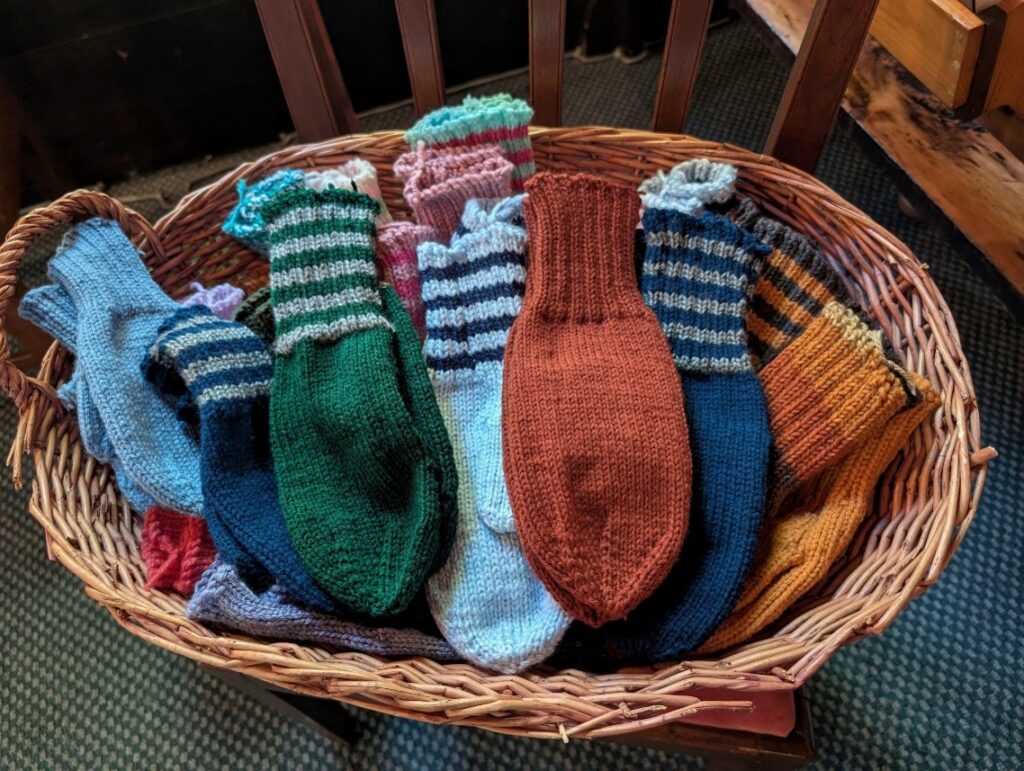
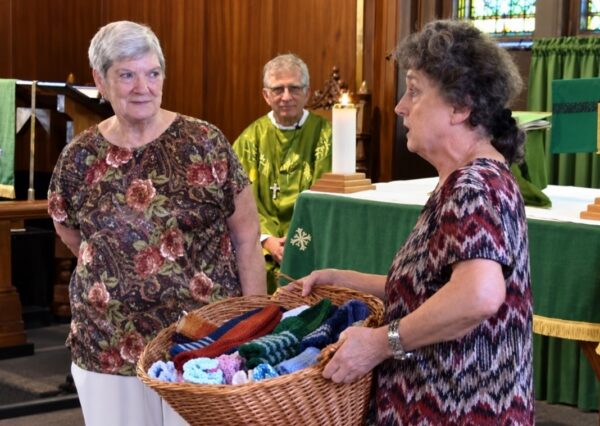
On Wednesday, I learned how Janet Butcher, a parishioner at St. Margaret’s church, and her lifelong friend Barb Finniss, came together to create 36 pairs of woolen mittens to be provided as gifts through the Caring and Sharing Food Bank in Enfield.
Janet provided yarn and Barb knitted steadily over the past few months. When the mittens were revealed in church, peoples’ gratitude erupted in applause. Community and friendship, it seems, lead to thankfulness.
Yet here I shift gears, and note that for many people, suffering can be a barrier to thankfulness.
ADVERTISEMENT:




For example, if you live with a serious mental and/or physical health diagnosis, you can be subjected to isolation, poverty, betrayal and loss. What’s to be thankful for?
The late David Powlison, a Christan counselor who worked in psychiatric hospitals and later taught at Westminster Theological Seminary, is a source of wisdom here.
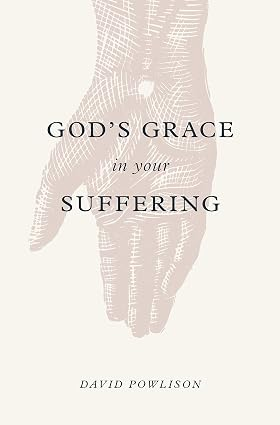
In his book, God’s Grace in your Suffering, he argues even harsh and hard experience can lead us to accept and be grateful for an eternal beauty that we can’t quite control or grasp.
Powlison notes the study of Scriptures shows nothing is new in this process. In the Book of Job, the writer noted our lives are “few of days and full of trouble.” (Job 14.1)
And yet, Powlison said afflictions press us “to a reconsideration of what lasts,” as Job did when he finally encountered a God and repeatedly refused to curse Him. The afflicted Job refused to succumb to corrosive anger and shifted to awe.
And Powlison teaches that those of us who receive grace may then pass it along, like those mitten makers and roof builders noted above. St. Paul began his letter to the troubled church in the Greek city of Corinth by asserting God is one “who comforts us in all our troubles, so that we can comfort those in any trouble with the comfort we ourselves receive from God.” (1 Cor. 1:4).
ADVERTISEMENT:


So, for now, the way forward is to recognize the blessings around us and then take responsibility for their expansion, as we are able.
What does that look like in a typical week? Powlison argues our first question should be: “How will we wisely love struggling people?”
Then he asks: How can we include people in church family life? Our family life? How can we plug them in? Get them involved?
His suggestions resonate as we prepare to dive into turkey and ham feasts. “You can have them over for dinner. You can help your family realize the person might be different, but we nonetheless love her.”
“Give the person the capacity to use gifts. … fulfilling the image of God from creation, that we’re meant to be part of community,” he said.
“We must put practical feet on basic kindness.”
Rev. Michael Tutton is a former national journalist, who is now the Anglican priest in the Parish of Fall River and Oakfield.