

By Rev. Michael Tutton
There are few things more uplifting than the sounds and aromas that float through the air as a happy group of cooks create a meal.
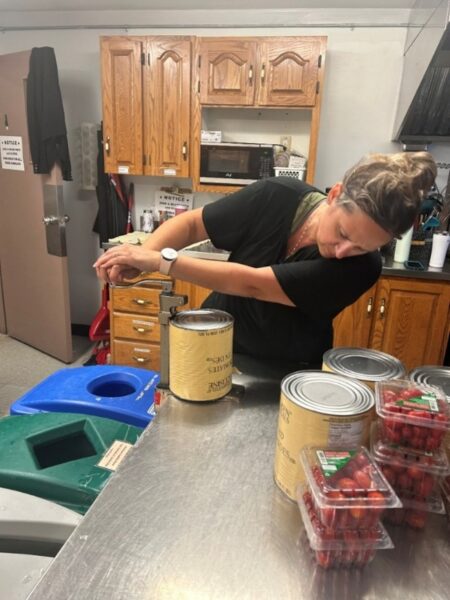
I noticed this during a July 30 visit to a group of kitchen volunteers with the Cobequid Food Security Network, a non-profit group that weekly prepares nutritious and hearty soup for people seeking a meal.
Soup seems a classic and simple solution to hunger.
You chop the vegetables, add the spices and stir this into a fragrant mix. After that, the network brings the servings from the kitchen at Knox United Church to freezers in Sackville, Beaver Bank and Lucasville where folks can easily access them.
Yet, there’s more here.
There’s a community that’s created in the process. The late C.S. Lewis, a British scholar and author, described this in his book, The Four Loves, as “Gift-love,” an environment where “we forgive or accept forgiveness, we console or are reconciled and … we ‘seek not our own.’
ADVERTISEMENT:



As a priest, I’m constantly reminded how homemade soup is a basic ingredient of Judeo-Christian ethics. The Sunday following my visit, I preached on Jesus ensuring five thousand received bread and fish from just a few initial portions. Why? Because he knew about basic human dignity.
Where does that stem from? The ethic goes back to Genesis 1.26-27, when the sages described humans as being created in the image of God, and therefore each one a dignified creature.
The Cobequid Food Security Network is not a religious group, but its mission is descended from this approach. Its website (www.foodsecuritynetwork.ca) says the network exists “to provide dignified access to healthy food while building a stronger, more connected community through shared skills and spaces.”
Amy Patterson, the executive director, told me during the gathering that her earlier career as a family support worker taught her it makes no sense to turn food into a privilege.
“You work with families and you see them at their worst and you see them at their best, and you ask the basic question: ‘Who can function if they’re hungry?” she said.
However, could it be that the second part of the mission – the relationship building — is equally crucial in making a just world?
Patterson calls this the “social model,” where the volunteers trained to peel, chop and stir are learning as they chat.
I watched as 10 bags of parsnips, nine sweet peppers, six bunches of celery, six bags of carrots, 10 pounds of carrots, five bags of onions, four tins of tomatoes, two Chinese radishes, one massive cabbage were reduced by flashing knives into bite-sized pieces and mixed into nourishment that makes over 300 servings.
The seven people are themselves a potpourri of ages and experience. Yet, banter is a universal thing, ranging over topics from slicing methods to corny jokes about veggies.
ADVERTISEMENT:



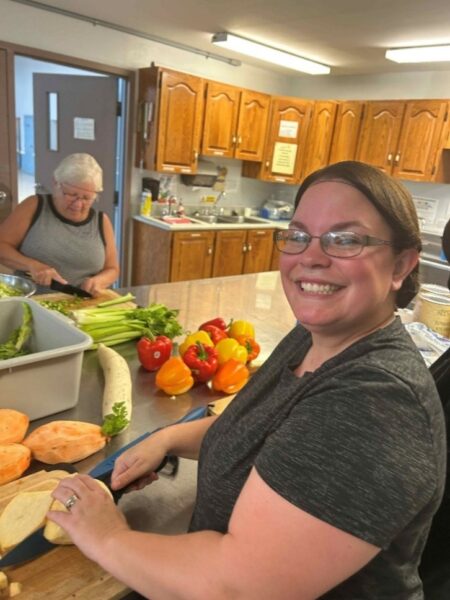
Angela O’Blenis, a 36-year-old with an infectious smile, said she heard about the soup system through her volunteer activities in a family help centre, and signed up easily on the network’s website.
The mother of three is busy with her children and studying psychology and family science at Mount Saint Vincent University, yet she felt drawn to the kitchen.
“It’s so cool to see people here getting together, seeing a need and figuring out a way to help with this,” she said.
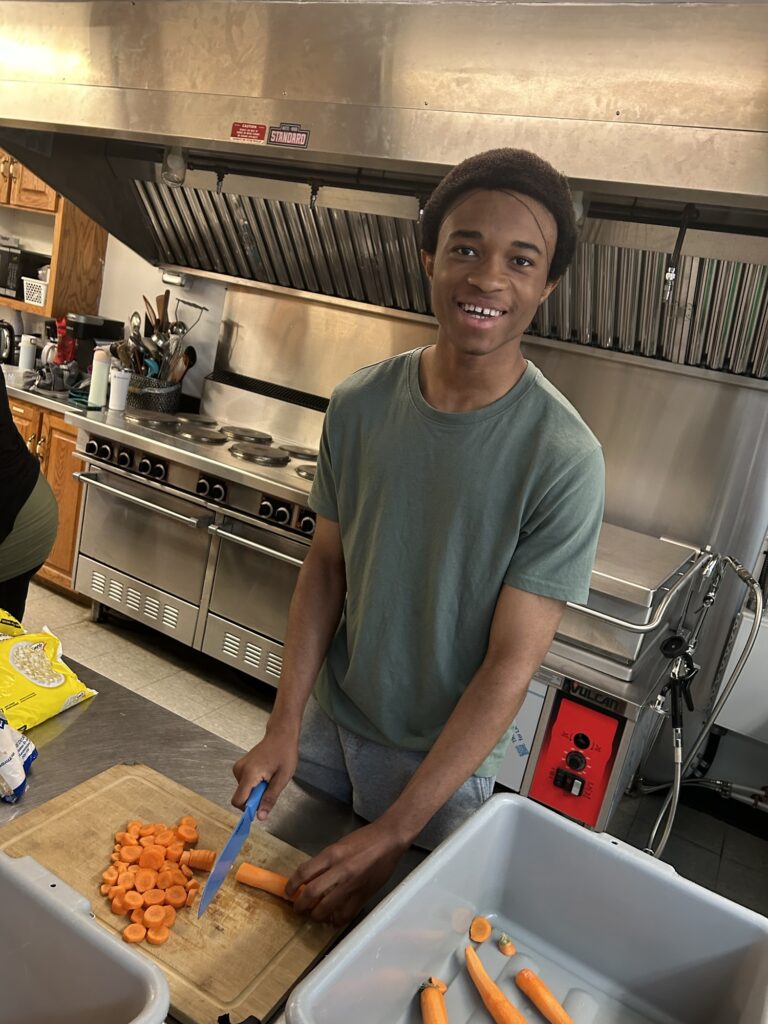
Figure 3 David Nsofor, 17, chops carrots. (Rev. Michael Tutton)
At the other end of the production line, it was Day 1 at the kitchen for Shauna Duggan. She peeled carrots and moved them down the line to 17-year-old David Nsofor for the dicing. “I’m being taught that people do care about the community,” she said, just a few hours into her training.
Nicole Hiltz and her friend Betty Tipple are meanwhile slicing up the celery. The two friends are retired and like doing things together.
Hunger is sometimes linked to the capacity of people to prepare food, said Tipple.
“Some older people, they don’t cook. They need someone to make a nutritious meal for them,” she said.
ADVERTISEMENT:


Patterson describes herself as a “problem solver.” Lately, that involves expanding freezers and soup preparation into the nearby communities of Lakeview, Fall River, Fletchers Lake and Windsor Junction, as early as this fall.
These include areas where there are “food deserts,” meaning neighbourhoods where affordable food can’t be reached easily on foot.
As a result, the network is planning partnerships with more church kitchens, fresh locations for freezers, and will soon seek more volunteers.
One issue to be tackled: the network has the goal of acquiring a big cauldron, referred to as a “tilt skillet”, that can hold 350 servings, rather than having to cook in multiple, hard-to-handle stock pots.
It will take time but banter, busy hands and the banality of stirring a pot are more potent than we imagine.
St. Paul taught this in a wider way to the early communities he formed. Provide help to others, he counseled, but above all notice what happens inside you. “If I give all I possess to the poor … but have not love, I gain nothing,” he wrote.
Rev. Michael Tutton is a former national journalist who now works as an Anglican priest in the Parish of Fall River and Oakfield.