



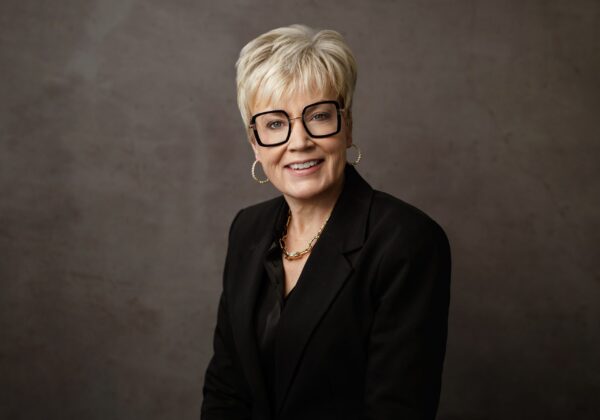
The following is an op-ed submitted by Brian Foster, executive director with Inclusion Nova Scotia and Krista Carr CEO of Inclusion Canada.
“Masters of Our Destiny.” This is the title the federal government has chosen for Budget 2026. It includes billions of dollars in corporate tax breaks and incentives to boost economic growth and promises a Canada where people have the freedom, opportunity and resources to shape their lives.
But for people with an intellectual disability and their families, that promise remains out of reach.
How can someone control their future when they cannot afford the basic necessities, access essential benefits without navigating restrictive rules, find meaningful employment or choose where and with whom they live?
The budget speaks of self-determination. This is a worthwhile goal but needs to apply to everyone.
There are some budget items that we welcome. Making the Canada Caregiver Credit refundable, a slight top up for groceries and everyday essentials, and improved access to Registered Disability Savings Plans. These will help individuals and families. But they do not address the poverty and systemic barriers that deny people with disabilities genuine independence with income security.
Consider the Canada Disability Benefit (CDB).
Introduced with the promise of lifting people with disabilities out of poverty, , the CDB remains at a maximum of just $204.20 a month — less than $7 a day. With rising costs of housing, electricity, food, and transportation, this is nowhere near an adequate response to disability poverty.
We have consistently called for a phased increase to $800 per month by 2027–28 and $1,393 by 2029–30, alongside expanded eligibility. Yet the budget offers no increase.
A refundable tax credit for caregivers is welcome, but it cannot replace an adequate income for adults with an intellectual disability. Aiding families and ensuring people with disabilities have the resources to live independently must go hand in hand.
The Disability Tax Credit (DTC) remains a massive problem and barrier. Originally a tax measure, it now acts as a gatekeeper for eligibility to the CDB, Registered Disability Savings Plans and 11 other federal programs.
As reported by the Canadian Tax Observatory, an estimated 84% of people with disabilities do not have the DTC. This alarming statistic underscores how few people actually are accessing federal supports. They face complicated applications, cumbersome medical certification and out-of-pocket costs.
Since government talks about wanting to reduce red tape, here is a good place to start. People already recognized through provincial or territorial disability income programs should not have to prove their disability again! Ottawa must recognize existing determinations, create alternative eligibility pathways outside of the tax system and remove unnecessary barriers. Access to essential supports should not depend on someone’s ability to navigate government bureaucracy.
The budget also falls short on inclusive employment. For more than a decade, Ready, Willing and Able (RWA), a national initiative delivered by Inclusion Canada and Autism Alliance of Canada, has demonstrated what is possible when employers remove barriers and recognize the talents of people with an intellectual disability or autism.
The initiative has helped facilitate more than 6,500 jobs across Canada, creating opportunities for people to earn an income, contribute their skills and participate more fully in their communities.
The budget’s one-year funding extension is definitely welcome, but it falls far short of the five-year, $50-million investment advocated by all involved.
At a time when Canada is focused on economic growth and productivity, inclusive employment should be seen as an investment in our country’s future, It deserves sustained investment.
Housing is an equally important test of self-determination. An injection of $11.2-billion over four years to address homelessness is welcome and desperately needed. But without an explicit commitment to prevent public funding from supporting congregate and segregated housing, we risk using todays’ investments to recreate the institutional models that people with an intellectual disability and their families have spent decades fighting to leave behind.
Federal housing dollars must create inclusive housing that allows people to choose where and with whom they live, rather than isolate and congregate them away from community.
These are not simply policy gaps in a federal budget. They reflect deeper systemic barriers that continue to limit the choices, opportunities and attainment of an inclusive life for people with an intellectual disability.
A stronger Canada cannot be measured solely by economic growth or new investments or the ambitions of those who already have opportunities. It must also be measured by whether those who have historically been excluded finally have the same choices and freedoms as everyone else.
Brian Foster is executive director with Inclusion Nova Scotia. Krista Carr is CEO of Inclusion Canada.