


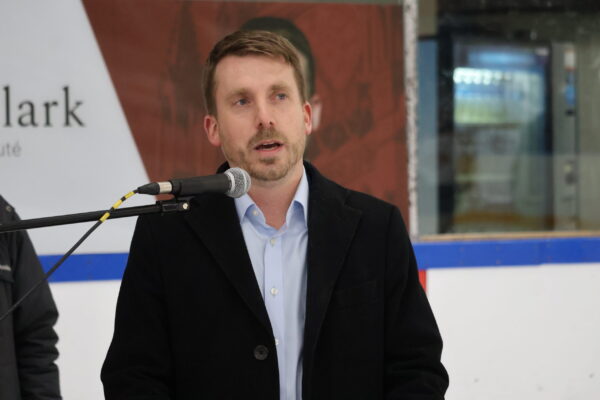



LOWER SACKVILLE: One year into his first term as MP, Braedon Clark said the role has been equal parts “humbling” and “exciting,” as he works to balance national challenges like housing and cost of living with the needs of residents in his riding.
Speaking in an interview with The Laker News on a rainy Friday at the Pink Piano café in Lower Sackville, Clark reflected on his first year in office.
“It’s been incredible… amazing, humbling, difficult, exciting,” the Sackville-Bedford-Preston representative said.
“There’s only 343 people in the country that get to be MPs, and for me to be one of them and to represent the area I live in and grew up in is a real honour.”
ADVERTISEMENT:




Housing continues to be a top concern, an issue Clark says he has focused on since his time as an MLA. While acknowledging affordability remains a major challenge, he pointed to signs conditions are beginning to stabilize.
“Housing is still too expensive—there’s no question about that,” he said. “But rents in Canada are down… and in Halifax they’re slowing down as well.
“We’re not where we need to be, but we’re trending in a better direction.”
Cost of living pressures remain another major issue, particularly when it comes to rising fuel prices. Clark said global factors continue to limit what governments can do.
“It’s really hard,” he said. “We’ll control what we can control… we removed the excise tax, so without that it would be over $2 (per litre). But we can’t control what’s happening globally.”
ADVERTISEMENT:



Fuel prices in Nova Scotia have climbed sharply—by nearly 30 cents in recent weeks—despite federal measures such as the 11.5-cent excise tax reduction and the earlier removal of the carbon tax. Clark acknowledged the frustration.
“I totally understand why it’s frustrating for people… you take it off and then prices go up the next day,” he said.
“We’re not going to see gas prices get back to a reasonable level until the war in Iran is over.”
Clark also pointed to expanded federal supports, including grocery and essentials benefits, as part of ongoing efforts to ease financial pressure on Canadians.
On immigration, Clark said the federal government has had to adjust after several years of rapid population growth.
“I think we all generally agree that over the last three- or four-years immigration was too high,” he said. “That caused problems with housing and traffic and all the things we know.”
At the same time, he cautioned against overcorrecting.
“You don’t want to go too high and then overcorrect in the other direction,” he said, adding that “generally speaking, I think we’re moving in the right direction.”
ADVERTISEMENT:


Looking ahead, Clark said infrastructure projects—including community facilities and the proposed Bedford ferry—will be key priorities.
“I think infrastructure is the one where we can make the most significant difference in the next little while,” he said.
He also stressed the importance of collaboration between federal, provincial, and municipal governments.
“I’d rather get everybody around the table and say, ‘Let’s figure this out together,’ rather than cause problems that can linger,” he said.
Clark said some of the most meaningful work over the past year has come from helping residents behind the scenes, particularly with immigration cases.
“People who maybe would have had to leave the country… or spent years waiting for family members to get here,” he said. “That’s really, really rewarding.”
As he looks ahead, Clark said he remains motivated by the people he represents.
“I’m super grateful to have this job,” he said. “The people I represent are awesome… and I’m really proud of the work we’ve done so far.”