

By Rev. Michael Tutton
One basic tradition of the Christian church is that its members are called to “Go … and make disciples.” Hence the word “missionary” has entered the world’s vocabulary.
The imperative command from Jesus, “Go,” is from Matthew’s Greek poreuo, meaning to “transport oneself … from one place to another,” according to Strong’s concordance.
This transformation is what Tim Horne and his wife Lilliana experienced in the 1990s as missionaries to a sprawling squatters’ settlement known as Bastion Popular in the northern suburbs of the city of Guayaquil, Ecuador.
During a meeting with Horne, I learned about how he began by seeing his work as “reading the Bible with others,” which is perhaps the classic role of a missionary.
But his journey also involved walking and talking, learning and listening, and discerning what a community’s needs were.
In the years that followed, the couple helped found a primary school, a family summer camp by the sea and an evangelical church, drawing on the support of individual donors and Brethren churches, including the Fall River Chapel in Fall River, N.S.
ADVERTISEMENT:





Over 23 years later, there is ongoing financial support from Canadians for these projects. Also, this summer 13 people from the Chapel and Christ Church Anglican Church in Dartmouth will visit, after their churches raised $6,000 to support the Lighthouse of Hope Camp by the Pacific Ocean.
But I’ve jumped ahead. First, the story of how this began.
In 1993, the couple left their work in prison ministry in Canada after researching a long-held dream to become overseas missionaries, deciding to travel to Ecuador.
Horne, now 69, said he started by attending Guayaquil churches and offering bible studies. However, as he learned Spanish and explored the squatter settlements (known as “invasions”), the self-described “shy” evangelist began noticing the needs of children.
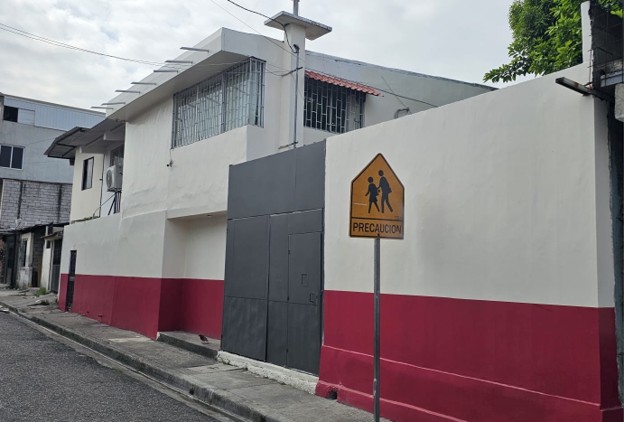
Residents of Bastion Popular were regarded as squatters by the state. Most couldn’t afford the travel and expenses for public schools in neighbouring areas. Meanwhile, private schools charging fees and offering poor quality education prevailed, and those were also beyond the means of most.
The first property the couple purchased was imagined as a place for a park bench and gentle prayers, away from the constant noise of the settlements.
However, Horne met the parents of five children who told him they lacked enough income to both feed their young ones and send them to school. The destiny of the missionary’s little plot of land shifted from sanctuary to learning centre.
The Hope of Bastion School opened in 1997 with one room for 20 children. More children came, Canadian church donations followed and today there are 10 classrooms. The couple’s day-to-day involvement continued until 2007, when they returned to Nova Scotia for family reasons.
The church (in the school gymnasium) and the school they founded continue today, run by Ecuadorian leaders.
ADVERTISEMENT:





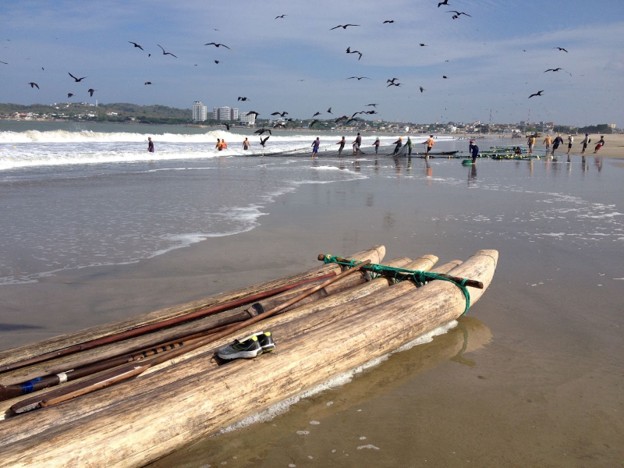
Meanwhile, Horne’s connection with the Fall River Chapel led to the family camp on the Pacific Ocean which hosts up to 120 people from poor communities for brief times of rest and joy.
Glenn Clark, an elder at the Chapel, led youth teams to help support the camps in the early 2000s. The youth, inspired by their experiences, then convinced Fall River’s leadership to donate the Chapel’s entire building fund to buy a permanent property for the Lighthouse camp.
The Hornes’ connection with the projects has continued, as they help churches to raise money to sponsor the family camp and the school.
Isaac Robert heard a Jan. 18 sermon given at the Chapel by Horne describing his work, and the 37-year-old operations officer in the Royal Canadian Navy was moved to become involved.
He and his wife Carolanne and their five children will travel on the mission trip this summer. “When I heard about this mission, it lit something up for me, something I’d forgotten … since Bible School,” he said during an interview.
“For me, it’s the children. Whenever it’s children, it touches my heart. … I’d like to make a difference in the kids’ lives.”
ADVERTISEMENT:


Robert says he has handyman skills and organizational training, while his wife is skilled at making crafts with children.
Listening carefully, Horne is ever alert to possibility. “Maybe you and your wife want to bring down a craft set so that you and she can work with 20 or 30 kids,” he suggested.
As a priest leading a local parish, itself a form of mission, I see within Horne’s descriptions the heart of faith.
Plans are made amidst an openness to changing course, and ordinary people realize the inadequacy of relying too heavily on themselves alone.
“We say, ‘Here I am, broken and weak, of weak faith, undisciplined, but here I am,’” said Horne. “We never dreamed of making a school or of being the kind of people who could do this. But God did this with us and placed lovely people around us to ensure it carried on.”
Rev. Michael Tutton is a former national journalist who now works as an Anglican priest in the Parish of Fall River and Oakfield.