





DARTMOUTH: For dogs like sweet Isla, she has the odds of getting adopted stacked against them. That’s according to newly released data in the 2025 Hill’s Pet Nutrition Canada State of Shelter Pet Adoption Report.
The report can be found here.
While many pets find homes quickly, dogs like Isla, a loving Siberian Husky mix, face significantly tougher odds of adoption due to their size and other factors, leading to heartbreakingly long shelter stays.
Isla is 26kg of love and affection.
She’s been under the care of Nova Scotia SPCA sporadically since 2022.
ADVERTISEMENT:



According to newly released data in the 2025 Hill’s Pet Nutrition Canada State of Shelter Pet Adoption Report, the odds are stacked against her.
The report reveals that only 17% of people are likely to adopt a large dog, significantly lower than cats (48%), medium dogs (37%), and small dogs (39%).
Isla can be a little nervous around new people and animals, and has a few medical needs. These factors, combined with her size, make her adoption journey particularly challenging.
The silver lining? One in four Gen Z and Millennial Canadians (25%) are likely to adopt a large dog, compared to only 10% of Gen X and Baby Boomers.
This younger demographic represents a key opportunity for dogs like Isla.
However, the report underscores that the overall cost of pet ownership (57%) and veterinary care (72%) are significant deterrents for potential adopters.
ADVERTISEMENT:




Isla also struggles with allergies.
To help encourage Isla’s adoption and address potential cost concerns, Hill’s Pet Nutrition will provide a year’s worth of specialty Hill’s Prescription Diet food for her future adopter.
This science-led nutrition will ensure Isla is happy and healthy in her well-deserved new home.
Hill’s Pet Nutrition is a global leader in science-led nutrition and animal welfare advocacy.
The research in the report they released, which provides insights from a nationally representative group of 500 current and prospective Canadian pet owners, offers a comprehensive understanding of consumer perceptions and behaviors around pet adoption, and a comparative analysis to American data trends.
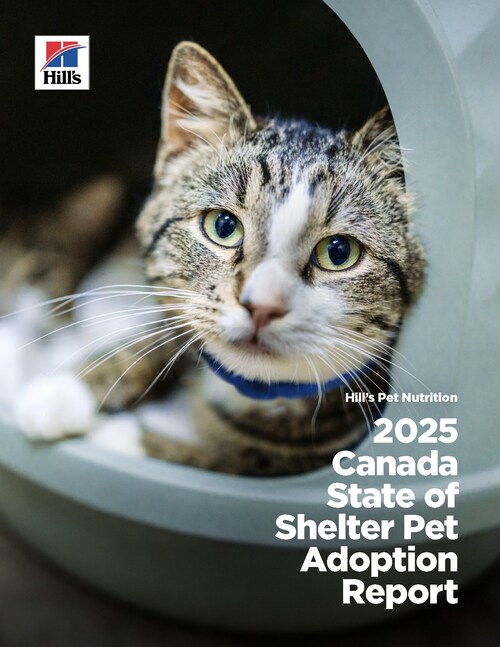
The brand new report aims to identify pathways for change and serves as a valuable resource to Canadian animal welfare organizations and professionals, as well as animal advocates.
From cost concerns to the nuanced emotional journey of adopting a pet, the report insights highlight the urgent need for innovative solutions and collaborative efforts to help more pets find and stay in loving homes.
“The findings from our first Canada State of Shelter Pet Adoption Report are crucial for understanding the unique landscape of pet adoption here,” said Frances Cheslo, RVT, Shelter Engagement Manager, Hill’s Pet Nutrition Canada.
“It’s clear that while Canadians love pets, the perceived and actual costs, particularly for veterinary care, are major deterrents to shelter adoption.”
ADVERTISEMENT:


Key findings from the report include:
- Shelter adoption is the top choice for the majority of Canadians: 58% are likely to choose a shelter when adopting a new pet, though the reality is most Canadians’ current pets come from a family member/friend (29%) or a breeder (28%).
- The price tag of pet ownership is holding people back: 40% of respondents say the initial cost to adopt a pet makes it difficult to consider pet ownership, and 57% say their biggest concern is the overall cost of pet ownership.
- The cost of veterinary care is the no. 1 barrier to owning a pet: 83% of Canadians most frequently rank veterinary care in their top three pet expenses, and 72% say the cost of veterinary care directly impacts their decision to adopt a pet.
- Affordability and attachment are barriers to becoming a foster parent in Canada: 23% of respondents believe they cannot afford a foster pet, and 40% are afraid they will end up adopting their foster pet, leading to only 8% of Canadians having fostered before.
- Fostering is viewed favourably, and many would consider it if given incentives: While 59% of Canadians view fostering positively as a way to try pet ownership, 68% of Gen Z and Millennials and 44% of Gen X and Baby Boomers would consider fostering if care costs are covered.
- Younger generations show stronger intent to adopt, but the key is repeat shelter adopters: Among those who have adopted from a shelter before, 87% Gen Z and Millennials and 64% of Gen X and Baby Boomers would consider adopting from a shelter again.
- The key to large dog adoption is younger Canadians: 25% of Gen Z and Millennials are likely to adopt a large dog, compared to only 10% of Gen X and Baby Boomers.
“At Hill’s Pet Nutrition Canada, we are committed to the welfare of all pets,” Cheslo said.
“There is no ‘one-size-fits-all’ approach to solving the over-capacity crisis in Canadian shelters, but taking steps to address these nuanced barriers for adopters is key to improving outcomes for shelter animals nationwide.”
ADVERTISEMENT:


This inaugural Canada State of Shelter Pet Adoption Report is part of Hill’s Pet Nutrition’s ongoing commitment to animal welfare, which includes a rich history of shelter work and programming.
Since 2002, the Hill’s Food, Shelter & Love Program has helped support more than 15 million adoptions and provided more than $300 million in pet nutrition to feed shelter pets at more than 1,000 shelters across North America.
For more information about the 2025 Hill’s Pet Nutrition Canada State of Shelter Pet Adoption Report, visit hillspet.ca/en-ca/shelter-program.