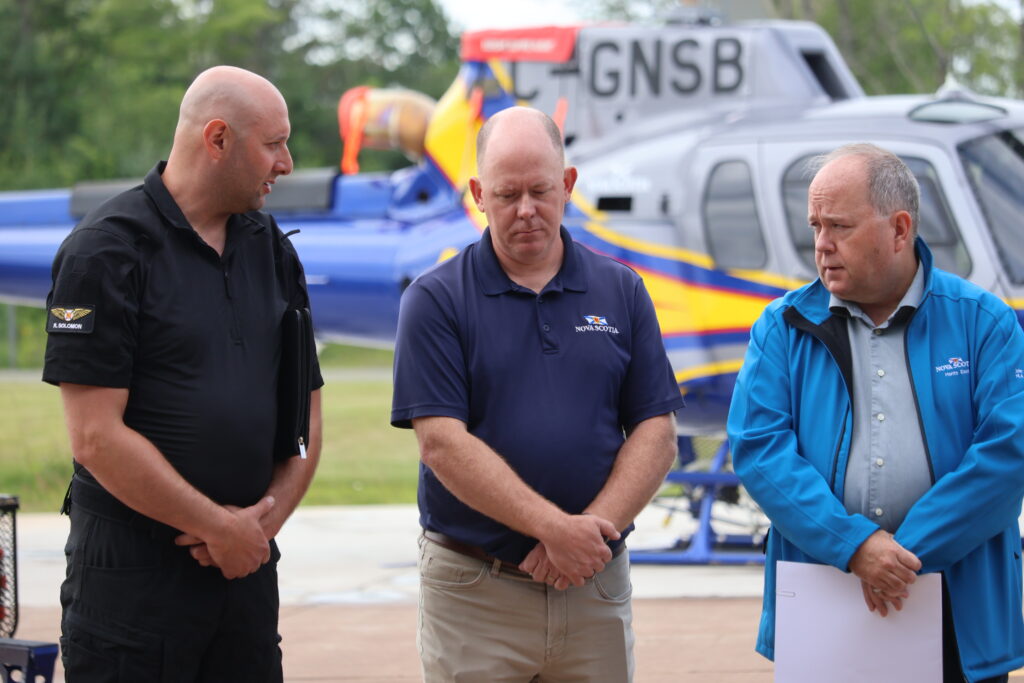

SHUBENACADIE: Nova Scotia’s wildfire-fighting capacity has received a major boost with the arrival of four new Airbus H125 helicopters, a fleet officials say will be on the front lines of emergencies across the province for decades to come.
Natural Resources Minister Tory Rushton unveiled the aircraft Tuesday in Shubenacadie, saying the helicopters are already in service and ready to respond to wildfires, search and rescue missions, emergency operations and aerial surveillance.
“We are in wildfire season right now, and conditions in many parts of our province are dry. That is why readiness matters,” Rushton said.
“When a call comes in, every minute counts. These helicopters give our team the ability to get eyes on a situation quickly, reach areas that are difficult to access by ground and support the crews working on the ground.”
The new fleet also received names chosen by Nova Scotians after a public competition that generated nearly 10,000 suggestions.
ADVERTISEMENT:






The entries were narrowed to four themed groups before residents voted on the winners:
Spirit of the Osprey
Spirit of the Eagle
Spirit of the Hawk
Spirit of the Falcon
Rushton said the names reflect both the province and the important role the aircraft play in protecting Nova Scotians.
“The public’s interest in naming these aircraft showed how much they care about the work these helicopters do,” he said, adding the names represent strength, awareness and agility.
The helicopters were purchased through a federal-provincial wildfire equipment and training agreement, with Ottawa and Nova Scotia each contributing $12.6 million toward the fleet.
ADVERTISEMENT:


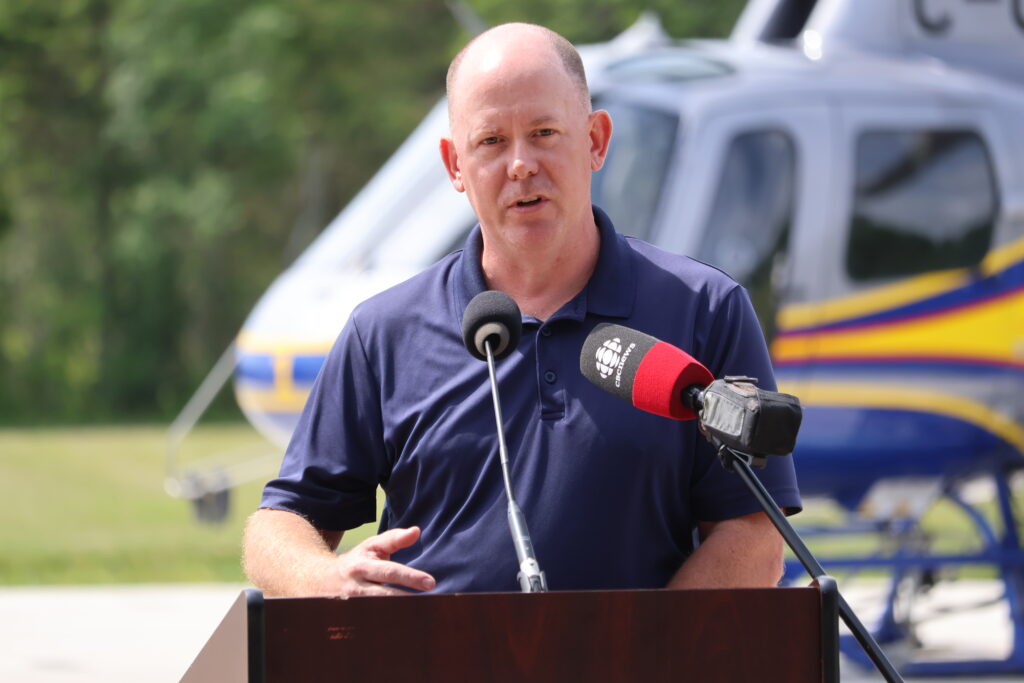
Dwayne Charette, Director of Sales for Airbus Helicopters Canada, said the delivery marks the completion of Nova Scotia’s helicopter fleet renewal and ensures crews have reliable aircraft for years to come.
“There is no greater testament to the utility of the H125 than knowing it is on the front lines and ready to go before the speeches have even been delivered,” Charette said. “These four helicopters will support wildfire management, protect natural resources, conduct aerial surveys and respond when communities need them the most.”
He said the H125 has earned a worldwide reputation for operating in demanding environments and is well suited to Nova Scotia’s varied landscape.
Reuben Solomon, Operations Manager with the Department of Natural Resources’ Aviation Services and one of the province’s helicopter pilots, said the aircraft represent a significant upgrade over the previous fleet.
The new helicopters are equipped with features including autopilot, air conditioning and collision-avoidance systems that reduce pilot workload and improve safety.
“Those technological advancements give pilots more bandwidth to focus on the operational task at hand,” Solomon said. “If pilots are well-rested, cool and calm, they’re more effective. They’re delivering more water to fires faster, and they’re doing it as safely as possible.”
He explained that the helicopters have an overall air time of about three hours per flight, with roughly 2.5 hours of effective time on the fire scenes.
“Thanks to fuel reserves that allow quick landings if needed and strategic fuel bases positioned around the province, combined with our multiple-aircraft fleet, we’re able to keep aircraft rotating continuously to deliver the maximum amount of water possible on the fires,” Solomon said responding to a question from The Laker News.
ADVERTISEMENT:


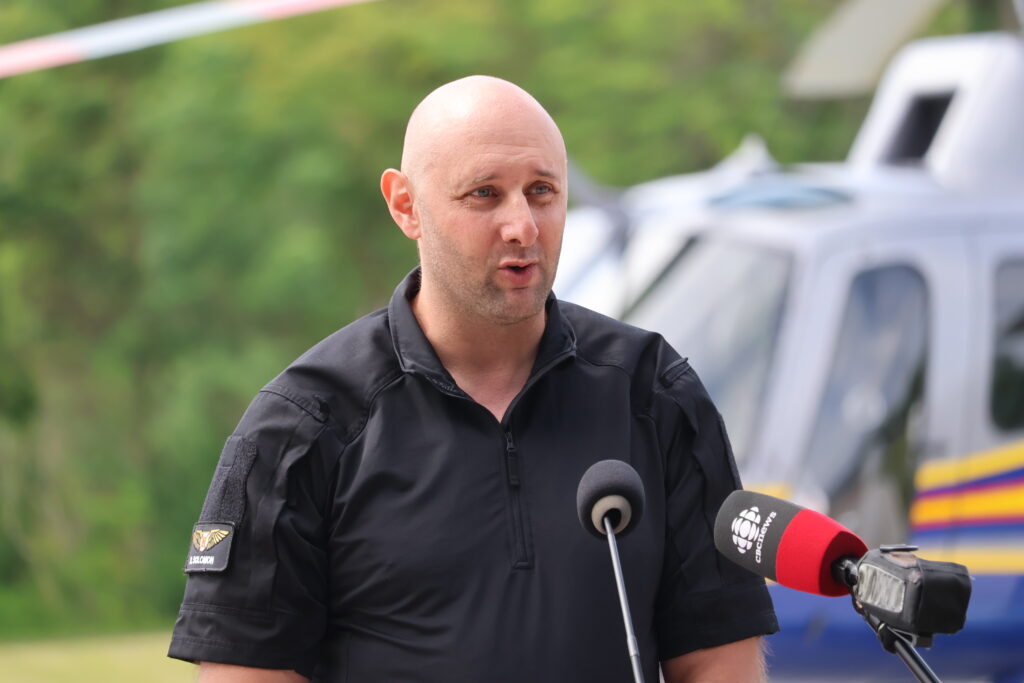
Solomon said helicopters are uniquely suited to Nova Scotia because they can reach remote locations that fixed-wing aircraft cannot.
“They can land where no other operational opportunity exists,” he said, noting they can draw water from even small ponds and streams to quickly attack wildfires.
Rushton said the helicopters complement four new fixed-wing water bombers and a bird dog aircraft added to the province’s wildfire fleet this year, strengthening Nova Scotia’s ability to respond to increasingly complex emergencies.
Beyond wildfire season, the helicopters will also support search-and-rescue missions, hurricane and blizzard response, and other emergencies across Nova Scotia.
Solomon said the overwhelming public response to the naming contest resonated with aviation crews.
“Seeing that positive feedback and that interaction with the naming really helps us feel like we’re part of the team,” he said.
“We really feel like we’re working for Nova Scotians.”