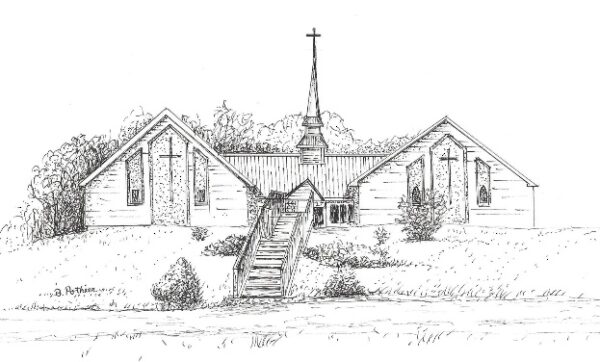
The following is a column from Rev. Michael Tutton.
I have taken to leaving my study and setting out on field trips in search of people whose lives and knowledge can inform my beliefs.
Along the way I’ve met a naturalist and a shepherdess, each of them teaching me how theology and the church must take a fresh, ecological direction.
First, the naturalist.
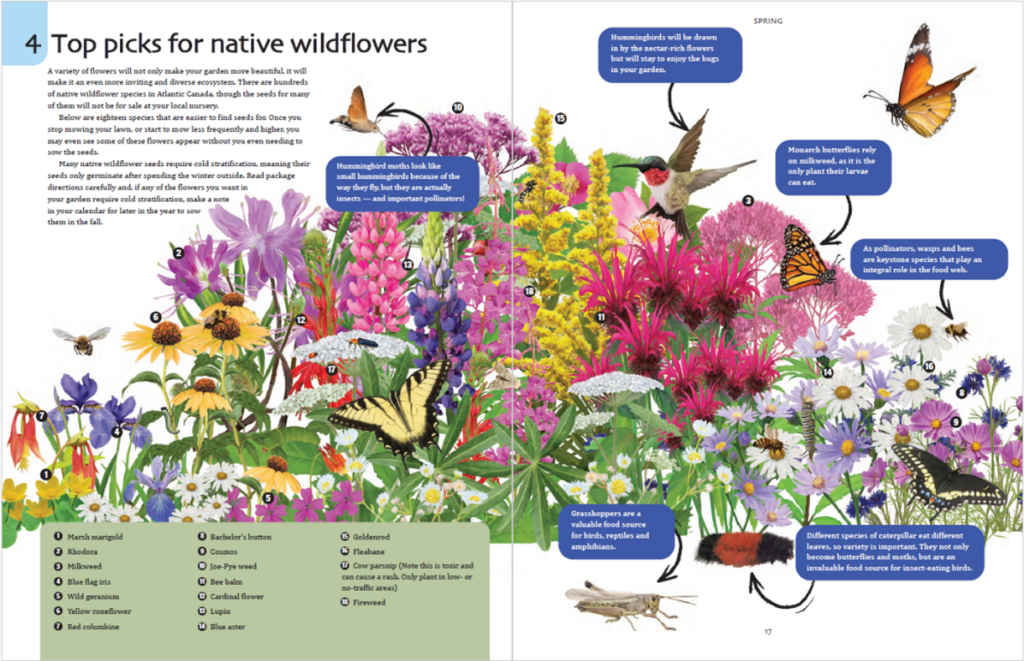
I went to see Jon Stone in Cole Harbour who. along with illustrator Jeffrey Domm of Belnan, N.S., has created a new book, “The Nature-Friendly East Coast Garden.”
Using rich and clear illustrations, the book advocates for backyard projects to return native plants and pollinators to our landscape and awareness.
I walked with Jon through his yard on a misty, late April evening.
He explained how his soaring yellow coneflowers will blossom alongside an array of native wildflowers in his urban landscape, attracting native species of bees, wasps, hummingbird moths, birds and other pollinators.
Stone, a 70-year-old Buddhist who once helped create the iconic “Hinterland Whos’ Who” series for the Canadian Wildlife Service, settled into a bench beside a serviceberry bush, explaining its blessings.
“This bush supports a huge range of wild species,” he said, pointing to the early, white blossoms.
“As the season progresses, it provides shelter for birds and supports pollinators including tiger swallow-tail butterflies and the over 100 varieties of bees in this ecosystem,” he said.
I played his comments during a May 3 sermon meditating on Jesus’s phrase, “I am the way, the truth and the life.” It struck me that to follow this way in a modern context, we must protect and sustain nature.
The German theologian Jurgen Moltmann wrote in his book Theology of Hope that “we need a new theology of the earth, and a new theology of creation.”
Moltmann argued the dominant idea of religious life has often been soulful and inward contemplation. But as the need to preserve the earth grows, “we must go outside of ourselves and experience the outer world with all our senses.”
The experience of nature leads us to take care of the world around us and each other, said Stone. “As we nurture life, we nurture our own spirituality,” he added.
In this way, we imagine suburban yards as being less about strips of perfectly green grass, and more about being habitats that host toad shelters or “bee nesting logs” drilled with 15-centimetre-deep drill holes.
Alongside the need to sustain nature runs the need to better understand rural and agricultural life, which was once a common part of peoples’ lives in the communities along the lakes.
In late April, I was struggling to grasp a gospel where Jesus describes himself as shepherd, as I have never raised animals.
For assistance, I drove to Upperbrook Farm in Central North River, N.S., to speak to Ruth Mathewson about caring for sheep.
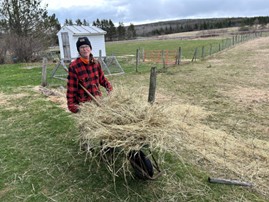
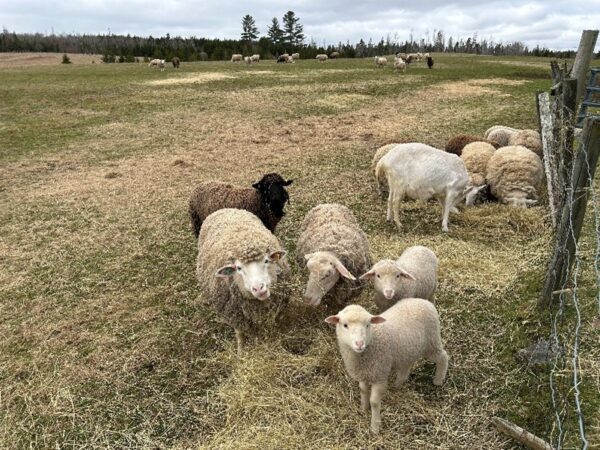
She provided relevant insights, including how a shepherd must love their work and be gentle with a flock. These animals will not come to a harsh voice, she explained.
Mathewson also talked about the potential of the sheep.
They can keep the land cleared and grazed and, after they’re sheared in early May, their winter coats provide care and comfort to humans.
“You can spin it, you can make sweaters, you can comfort people with it. Basically, wool has many therapeutic properties,” she explained. She also makes bedding with the wool and sells her wares at a farmer’s market.
Her thoughts helped me understand the gospel: Jesus sees great potential in humans, as well as their need for protection from the many pitfalls that can destroy their lives and the ecosystems which support them.
In verse 10 of this gospel Jesus says, “I have come that they may have life, and have it to the full.”
As we discussed this passage, Mathewson spoke of how she preserves the lives of some lambs during difficult births. She also noted that life is more than simply existing.
“You can give life in many ways, but providing joyful life is a different story. If you have a place where they (the sheep) feel protected, and they have food and water and room and fresh air … that would be a good life,” she said.
As the Easter season draws to its close and spring brings warmth to our land, I’m contemplating these conversations alongside scriptures and reading.
As a Christian, I’m concluding it’s a time to recall the Creator hasn’t only breathed divine Spirit into human beings, but all the earth, “renewing the face of the ground (Psalm 104)” in yards and sheepfolds across this land.
And I stand with Moltmann in his call for a new “ecological theology” where we consider all of creation, rather than seek to subdue it.
This, in my view, will help us to “pray with open eyes and … listen to the signs of oppressed creation.”
Rev. Michael Tutton is a former national journalist who now works as an Anglican priest in the Parish of Fall River and Oakfield.